Coronavirus Disease 2019 Open Cohort Study

Study acronym

COCS

Background

COVID-19 created an urgent need for reliable information about its clinical presentation, transmission, risk factors and outcomes across different populations. Early case definitions were largely based on travel history, contact with confirmed cases and respiratory symptoms. However, community transmission, asymptomatic infection, emerging variants, vaccination and geographical differences made it necessary to continually review these definitions.

There was also limited information about COVID-19 in African populations and its interaction with prevalent diseases such as malaria, pneumonia, tuberculosis, HIV, sickle cell disease and diarrhoeal illnesses.

Study purpose

The study aimed to refine COVID-19 case definitions and improve understanding of the disease’s incidence, clinical spectrum, risk factors, distribution and outcomes across different populations.

It also sought to produce evidence for public-health education, clinical research, disease surveillance and future epidemic-response planning.

Study design

COCS comprised several related observational components:

No investigational medicines or therapeutic interventions were administered.

Online study population

The online component targeted consenting adults aged 18 years and above. Participants were recruited through online platforms, email, social media and the study website.

The first phase planned to enrol approximately 5,000 respondents globally. About 500 participants were expected to enter the longer-term cohort component.

Hospital-based study population

The hospital component included retrospective records and prospective enrolment of patients admitted to medical and paediatric wards at Mbale and Soroti Regional Referral Hospitals.

The study examined patients with COVID-19 and conditions including:

Study sites

The hospital surveillance component was conducted at:

The initial online component was designed for global participation.

Principal investigator

The Principal Investigator was Professor Peter Olupot-Olupot.

The multidisciplinary study team included investigators from Mbale, Soroti and Lira, together with personnel responsible for project coordination, data management, administration, statistical analysis and quality assurance.

Project management

Dr Charles Benard Okalebo served as the Project Manager and Quality Assurance Officer.

Main objectives

The study sought to:

Study outcomes

The hospital surveillance component assessed outcomes including prolonged hospitalisation and death during admission. It also examined disease patterns, patient characteristics, treatment received, coexisting illnesses and changes in hospital admissions before and during the COVID-19 pandemic.

The online component assessed reported exposures, symptoms, risk factors and outcomes and provided automated guidance on actions such as self-isolation, contacting a health service or seeking medical attention.

Study period

The original online study proposed a baseline survey followed by cohort follow-up for 12 months. The amended protocol added longer-term hospital surveillance

Ethics and participant protection

Online participation was voluntary and limited to consenting adults. The survey was designed to be anonymous and not to collect names, telephone numbers or email addresses.

Hospital participants in the prospective component were to provide informed consent before enrolment. The protocol also described secure electronic data collection, restricted database access and encryption of information during transmission.

The Mbale Regional Referral Hospital Research and Ethics Committee and Uganda National Council for Science and Technology was obtained.

Protocol information

The final Protocol Version 2.0 was amended on dated 11 March 2021.

Study status

The amended protocol planned prospective surveillance until March 2026. The responsible study team should confirm whether data collection has formally ended and provide the current analysis, reporting, publication and close-out status.

Publications:
About

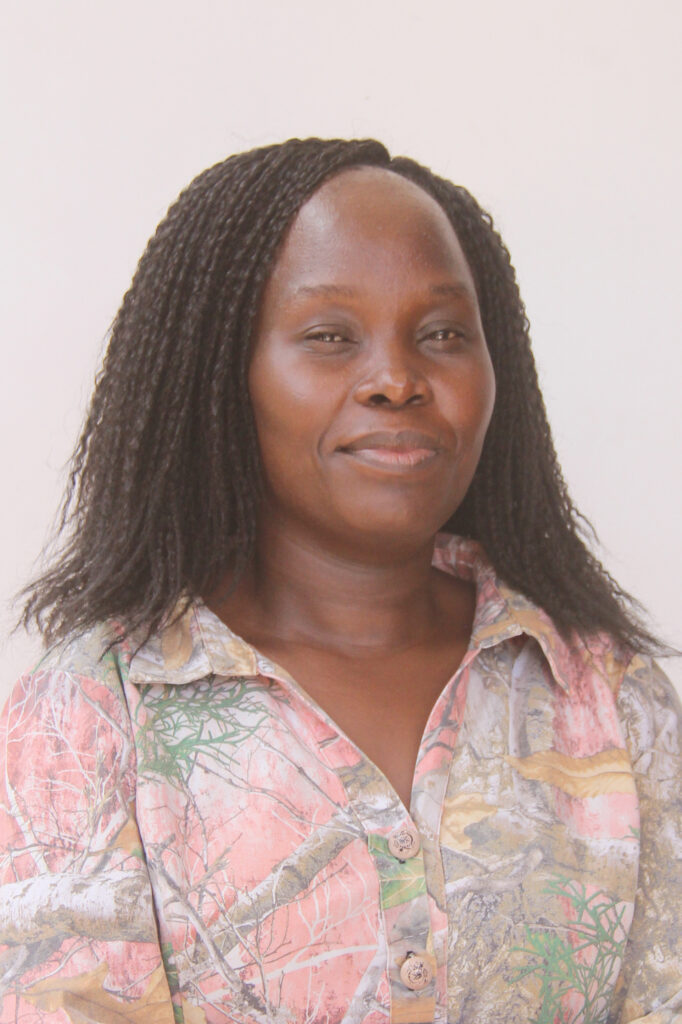
Ms. Adyango Catherine is a Human Resource Manager and Senior Grants Professional with over 15 years of experience in managing multimillion-dollar donor portfolios, project operations, and organizational systems strengthening. She currently serves as Human resource Manager at Mbale Clinical Research Institute (MCRI), where she leads in Human resource management,  donor compliance, project operations, and institutional capacity building.

At MCRI, Catherine has combined her expertise in grant management and human resources to establish efficient systems that support both research and staff welfare. She played a pivotal role in championing organizational culture reforms, developing HR policies, strengthening staff welfare schemes, and promoting inclusive recruitment processes. She also streamlined adoption of a Human Resource Management Information System (HRMIS/ESS), which reduced administrative bottlenecks and improved efficiency across teams.

Her academic background includes a Postgraduate Diploma in Human Resource Management (Uganda Management Institute), an MSc in Health Services Management, and a bachelor’s degree in business administration & management. Catherine is also pursuing ACCA training, demonstrating her commitment to continuous professional growth.

Catherine’s career reflects a strong commitment to strategic leadership, staff development, and inclusive programming, with a proven ability to balance donor expectations and human resource needs. Her work at MCRI has significantly contributed to building sustainable research capacity, enhancing compliance systems, and creating a supportive work environment that empowers both researchers and administrative staff.

About

Denis Amorut serves as the Study Site Coordinator at the Mbale Clinical Research Institute’s Soroti Site. He is a qualified Registered Nurse with a Bachelor of Science in Health Services Management from the Islamic University in Uganda and a Diploma in Comprehensive Nursing from Soroti School of Registered Comprehensive Nursing. Additionally, he is currently pursuing an Advanced Postgraduate Diploma in Clinical Research & Quality Assurance at James Lind Institute, showcasing his commitment to advancing his expertise in clinical research. Denis has an extensive professional background with 12 years in clinical nursing practice and 11 years dedicated to clinical research. He is registered with the Uganda Midwives and Nurses Council, highlighting his professional standing in the healthcare sector.
 
Throughout his career, Denis has held significant positions such as Trial Manager since November 2021 and previously as Study Site Coordinator at Soroti Regional Referral and Teaching Hospital from 2008 to October 2021. He also serves as a member of the Medicine and Therapeutic Committee at the same hospital since 2018. Denis has enriched his knowledge and skills through numerous online courses and certifications in areas like research ethics, data management for clinical studies, Good Clinical Practice (GCP), and managing health emergencies like Covid-19. His involvement in various research studies, including the TRACT study, and his roles in hospital committees further demonstrate his dedication to both practice and research in healthcare, focusing on improving patient care through evidence-based practices.

About

Ms. Linda Isabirye serves as the Public and Community Engagement Officer at MCRI, where her role encompasses a variety of tasks aimed at enhancing the Institute’s interaction with both internal and external communities. Her work is divided into two primary focuses: public engagement, where she communicates the Institute’s research and ideas to the public, and community engagement, where she assists others in conducting research and achieving their objectives.

In her community engagement efforts, Linda is involved in developing and sustaining a public engagement and involvement framework for the research program. She identifies local opportunities for community collaboration, nurturing relationships with MCRI’s research scientists, staff, and the broader community.

With over two years of experience, she has worked extensively with diverse community stakeholders. Her responsibilities include coordinating activities for the Community Advisory Board (CAB), designing, and overseeing the execution of Community Engagement (CE) initiatives. These initiatives are crucial for identifying, recruiting, and retaining volunteers, engaging community leadership, and supporting the formation and operation of community peer groups. This includes working with study participants, family support groups, and youth and adolescent groups, among others.

About

Rita Muhindo holds a MSc. Molecular Biology from Staffordshire University, UK. She attained her BSc. Biomedical Laboratory Science and Technology degree from Makerere University and an Advanced Diploma in Health Services Management from Islamic University in Uganda. She joined Mbale Clinical Research Institute in July 2011 as a laboratory technologist participating in setting up various laboratory assays for all clinical trials at the MCRI.

She is currently the laboratory manager of MCRI, a role which involves supervision all laboratory research activities at MCRI main and satellite laboratories. She has over twelve years of experience in managing laboratory clinical research and diagnostics service delivery across several key disciplines including molecular, immunology, hematology, microbiology and clinical chemistry.

She has keen interest in understanding the prevalence of red cell polymorphisms present in Ugandan donor populations. Her main focus of her MSc project was on the prevalence of Glucose-6-Phosphate dehydrogenase deficiency, α-thalassaemia and Haemoglobin S among Ugandan donors. Rita is also keen to explore the effects of these polymorphisms on the resolution of severe anaemia.

About

Dr. Charles Benard Okalebo is a highly qualified professional with a B. Pharm, an MPH, and currently a fellow in Infectious Disease and Field Epidemiology under the EDCTP-funded IDEA fellowship. His background as a pharmacist and public health specialist, combined with his role as a Quality Assurance Officer, has provided him with extensive experience in clinical research. This diverse training has honed his skills in assessing healthcare gaps, identifying problems, and designing projects to address these deficiencies. Dr. Okalebo values accuracy, integrity, quality, and career growth above all.
 
He is an experienced and determined professional in conducting clinical trials for both infectious and non-infectious diseases. With eight years in the research field, he has served as a Pharmacist and Quality Assurance Officer at the Mbale Clinical Research Institute, focusing on various types of clinical trials related to infectious diseases. His involvement spans across all phases of clinical trials (I-III), including protocol design, review, and implementation; navigating regulatory approval processes; managing investigational medicinal products (IMP); monitoring studies; establishing and implementing Quality Management processes; pharmacovigilance; and leading training sessions on the ethical conduct of research. The trials he has participated in include TRACT (ISRCTN84086586), GASTROSAM (ISRCTN76149273), PAC (ISRCTN11594437), FLACSAM (ISRCTN18051843), MIMBLE (ISRCTN10309022), and TABS (ISRCTN49726849) studies.
 
Dr. Okalebo is a dedicated researcher with a keen interest in advancing his career in pharmaco-epidemiology, statistics, and pharmacovigilance.

About

Felix Opio joined the Mbale Clinical Research Institute (MCRI) in April 2014 as Data Manager under the REACH (Realizing Effectiveness Across Continents with Hydroxyurea) ClinicalTrials.gov NCT01966731) which is a prospective, Phase I/II open-label trial of hydroxyurea designed to evaluate the feasibility, safety, long-term risks and benefits of hydroxyurea treatment for children with SCA in four sub-Saharan African countries (Mable Uganda,Kilifi Kenya, Luanda Angola and Kinshasa DRC).

He holds a Bachelor of Science in Computer Science from Gulu University, a post graduate diploma in Monitoring and Evaluation from Uganda Management Institute (UMI), Certificate in Project Management Professional from Devimpact Institute Kenya and various other certification in Clinical database development.

He Has 9 years of experience in Clinical Database design and Management, He is Currently overseeing data management work for the REACH study and all the day to day activities of the Project, He is also a member of the internal Clinical Trial Monitoring Unit and A chairperson Procurement Committee for Mbale Clinical Research Institute.

About

Ebitu Caleb Daniel serves as an I.T Support Officer at the Mbale Clinical Research Institute. He is recognized as an accomplished network and systems administrator, who takes pleasure in applying his skills to support and contribute to the technological advancement of research within the institution.
 
Ebitu graduated from Uganda Christian University Mukono with a Bachelor’s degree in Computer Science. Over the years, he has also acquired various certifications including CCNA, Information Security, Google Cloud Developer, PMP (Telecom), and Federated Identity Management.

About

Laban has accumulated over four years of experience in managing research financial processes since joining the Mbale Clinical Research Institute on July 1, 2019, as an Accounts Assistant. This experience complements his extensive background of over ten years in the banking sector, where he has previously worked for two banks in roles involving people management, cash management, internal controls, and accountability.

He holds a Bachelor’s degree in Business Studies, specializing in Accounting, from the Islamic University of Uganda. He is currently pursuing a Certificate of Public Accountants (CPA) from the Institute of Certified Public Accountants of Uganda (ICPAU), with only two papers remaining to complete the course.

Driven by an ambition to advance his career in accounting and expand his experience in research-related accounting managed by well-established systems and processes, he believes that MCRI is the ideal place for his professional growth.